Tool Sets Hub

Tool Sets: Types, Uses & Buying Guides

A tool set groups related tools into one package, usually with a case or tray to keep everything together. Sets range from a compact socket set for home repairs to a full mechanic tool set for a shop bay or an electrical tool kit for trade work. Choosing well means matching the set to the tasks you actually do, not just the number of pieces on the label.

This hub explains the main types of tool sets, how they differ, and what to check before you buy. Each section links to a dedicated buying guide for that category.

See our mechanic tool set guideBrowse types

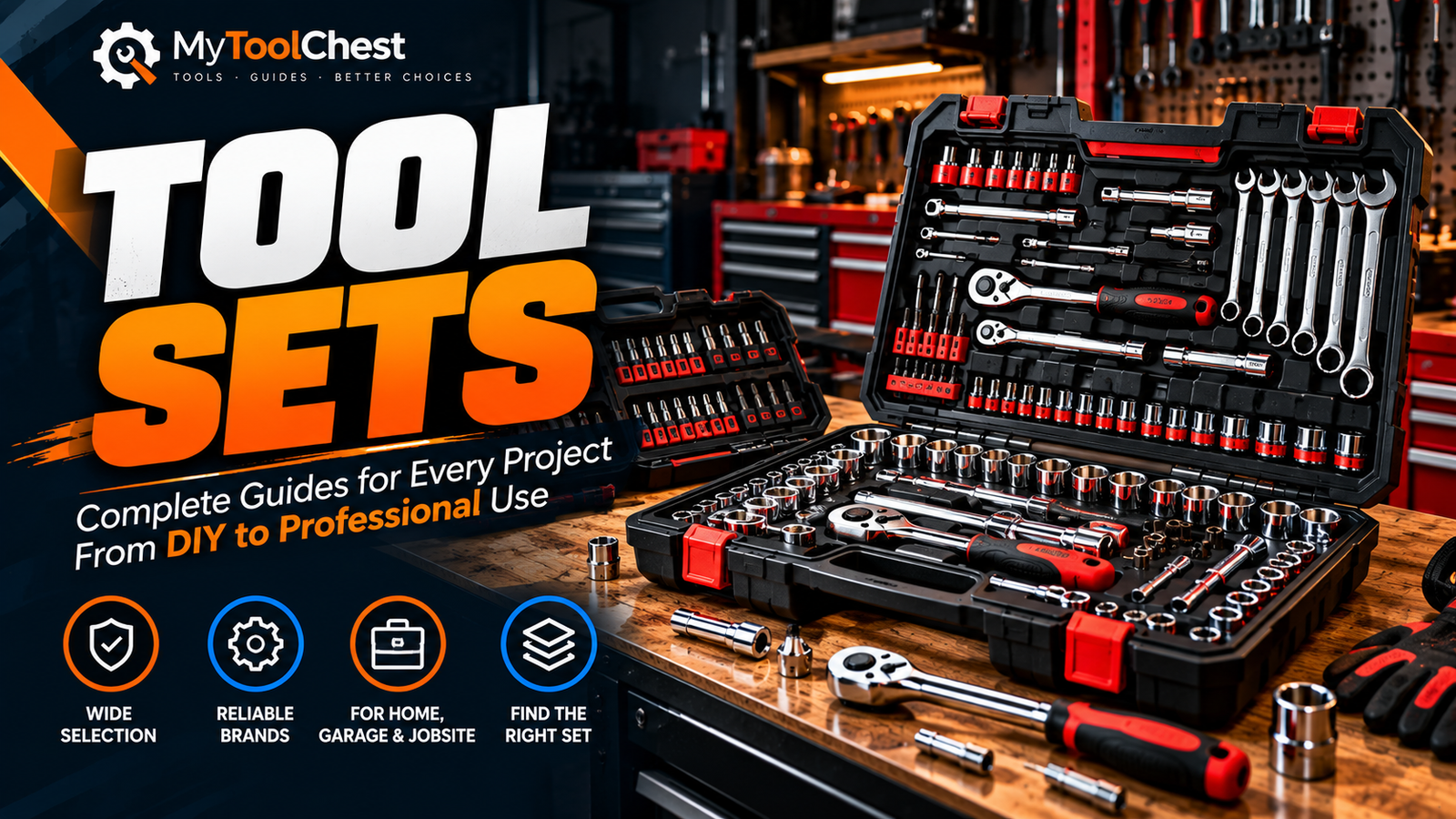
Assortment of tool sets including a mechanic tool set, socket set, wrench set, and power tool combo kit arranged on a workbench

Types of Tool Sets

“Tool set” is a broad term. These categories are not interchangeable: each one is built around different tasks, users, and formats.

Mechanic Tool Sets

A mechanic tool set typically combines sockets, ratchets, extensions, and wrenches in one case. It is designed for automotive repair and general mechanical work, and suits DIYers, technicians, and anyone maintaining vehicles or equipment.

Mechanic tool set buying guide

Socket Sets

A socket set focuses on sockets, often with a ratchet, extensions, and a case. It works well for fasteners in tight spaces and is a common starting point for automotive and equipment work. Drive size and size coverage matter more than the raw piece count.

Compare socket sets

Ratchet Sets

A ratchet set is built around one or more ratchet handles, usually with matched sockets. It differs from a broader mechanic set by emphasizing the ratchet mechanism itself: tooth count, handle length, and head profile affect how it feels in use.

Ratchet set guide

Impact Socket Sets

Impact socket sets are made for use with impact wrenches and drivers, which apply sudden torque rather than steady turning force. They are not a direct substitute for hand-tool sockets, and mixing the two can affect safety and durability.

Impact socket set guide

Combination Wrench Sets

A combination wrench set pairs an open end with a closed box end on each wrench. It covers a wide range of turning and holding tasks where sockets may not fit, and is a common companion to a socket set.

Wrench set guide

Automotive Tool Kits

An automotive tool kit is assembled around vehicle maintenance and roadside needs. It usually mixes sockets, wrenches, and specialty items in a portable case, and is meant to be carried rather than used as a shop home base.

Automotive tool kit guide

Electrical Tool Kits

An electrical tool kit centers on the tools electricians and trade workers reach for most, such as insulated drivers, pliers, cutters, and testers. It is task-specific and generally not a substitute for a mechanic tool set.

Electrical tool kit guide

Power Tool Combo Kits

A power tool combo kit bundles multiple cordless tools, usually sharing one battery platform. The tools included vary by kit, so the battery system, charger, and which tools are actually in the box tend to matter more than the number of items listed.

Power tool combo kit guide

How to Choose a Tool Set

Start with the work you do most, then narrow down by format, sizes, and quality. These factors help you compare sets on equal footing.

Intended Use and Tasks

A set built for vehicle repair looks very different from one built for electrical work or general home fixes. List the jobs you actually plan to tackle, then check that the set includes the tools those jobs call for.

Number and Variety of Pieces

A higher piece count is not automatically better. Many sets pad the count with small items like bits or hex keys. Look at which tools are included and whether they match your tasks, not just the total number.

Metric vs. SAE Sizes

Metric and SAE (inch) sizes are not interchangeable. Domestic vehicles and equipment vary, and mixing the wrong size can round a fastener. Many sets offer one or the other, while some include both. Choose based on what you actually work on.

Drive Sizes and Compatibility

Socket sets commonly come in 1/4-inch, 3/8-inch, and 1/2-inch drives, and each favors a different range of work. Check that accessories like extensions and adapters match the drive size of the set, and that impact-rated sockets are used with impact tools.

Material and Build Quality

Look at how the tools are finished, how the ratchet feels, and whether the case holds up. Handles, hinges, and latches often show quality sooner than the tools themselves. Read reviews that mention long-term use rather than first impressions.

Case Organization and Portability

A well-labeled case saves time and helps you spot missing pieces. If you carry the set between locations, weight, handle comfort, and how securely tools stay in place matter. Some cases are designed to sit on a bench, others to travel.

Expandability and Replacement Pieces

Check whether individual sockets, wrenches, or bits can be replaced or added later. A set that uses a widely available size standard is easier to grow than one with a proprietary layout.

Budget and Long-Term Value

A cheaper set can cost more if tools strip, ratchets slip, or pieces go missing with no replacements available. Consider warranty terms, how often you will use the set, and whether it can grow with your work. Verify current pricing on the retailer’s site.

Ready to compare specific options? Start with our mechanic tool set buying guide or browse the socket sets guide.

Compare Tool Set Types

A general side-by-side view. Actual contents, sizes, and coverage vary by brand and model, so check each product’s listing.

General comparison of common tool set categories
Tool Set TypeTypical UseIntended UserMain Selection Consideration
Mechanic tool setAutomotive repair, general mechanical workDIYers, technicians, shop usersBalance of sockets, ratchets, and wrenches for the work you do
Socket setFasteners in tight spaces, engine and equipment workAutomotive and equipment usersDrive size and size coverage, not the raw piece count
Ratchet setRepeated tightening and loosening of fastenersAutomotive and general mechanical usersRatchet feel, tooth count, and handle length
Impact socket setUse with impact wrenches and driversTechnicians and heavy-duty usersImpact-rated construction and matching drive size
Combination wrench setTurning and holding where sockets may not fitMechanical, plumbing, and general trade usersSize range, metric vs. SAE, and finish quality
Automotive tool kitVehicle maintenance and roadside needsDrivers, homeowners, roadside usersPortability and coverage of common vehicle tasks
Electrical tool kitElectrical installation, testing, and repairElectricians and trade workersTask-specific tools, insulation, and tester quality
Power tool combo kitCordless cutting, drilling, and driving tasksDIYers, contractors, and trade usersBattery platform, included tools, and charger

Featured Tool Set Buying Guides

Each guide goes deeper on one category. Start with the one closest to your tasks.

Common Buying Mistakes with Tool Sets

  1. Chasing a high piece count. Many sets pad the total with small bits or hex keys. Look at which tools are included and whether they match your tasks.
  2. Buying metric when you need SAE, or the reverse. Sizes are not interchangeable, and the wrong one can round a fastener. Match the set to the vehicles and equipment you actually work on.
  3. Mixing impact and hand sockets. Impact-rated sockets are made for impact tools, and hand sockets are not. Using the wrong socket can affect safety and tool life.
  4. Ignoring drive size. A 1/4-inch drive set is not a substitute for a 1/2-inch set on larger fasteners. Check that the drive size, extensions, and adapters suit your work.
  5. Overlooking the case. A poorly organized or flimsy case can waste time and let tools shift. Labels, layout, and latch quality matter over the long run.
  6. Skipping replacement and expansion options. If individual pieces cannot be replaced or added, a missing socket can sideline the whole set.
  7. Assuming all combo kits include the same tools. Power tool combo kits vary widely. Confirm the battery platform, charger, and which tools are actually in the box.

Tool Set FAQs

What is the difference between a tool set and a tool box?

A tool set is a group of related tools, usually sold together with a case or tray. A tool box is the container itself, which may or may not come with tools. You can buy a set without a box, or a box and fill it separately.

How many pieces should a tool set have?

There is no single right number. A higher count does not automatically mean better coverage. Focus on which tools are included and whether they match your tasks, rather than comparing sets by the number on the label.

Should I buy a metric or SAE tool set?

It depends on what you work on. Metric and SAE sizes are not interchangeable, and using the wrong size can damage a fastener. Some sets include both, which can be useful if you work on a mix of vehicles and equipment.

What drive size is most useful in a socket set?

Common drive sizes are 1/4-inch, 3/8-inch, and 1/2-inch, and each favors a different range of work. Many people start with 3/8-inch for general use and add others as their work requires. Check that extensions and adapters match the drive size.

Is a mechanic tool set a good choice for home use?

It can be, especially if you maintain vehicles or equipment. A mechanic tool set covers a broad range of tasks, but it may be more than a homeowner needs for basic repairs. Our mechanic tool set buying guide explains what is typically included.

What is the difference between a socket set and a ratchet set?

The two overlap. A socket set focuses on sockets, often with a ratchet included. A ratchet set places more emphasis on the ratchet handle itself, including tooth count, handle length, and head profile. Many products fall into both categories.

Are power tool combo kits worth it for a beginner?

They can be, if the included tools match the work you plan to do and you are comfortable with the battery platform. Because combo kits vary widely, it helps to confirm which tools, batteries, and charger are actually included before buying. See our power tool combo kit guide for more detail.

Choosing the Right Tool Set for You

Match the set to the work you actually do, then fine-tune the details:

Explore the mechanic tool set guide