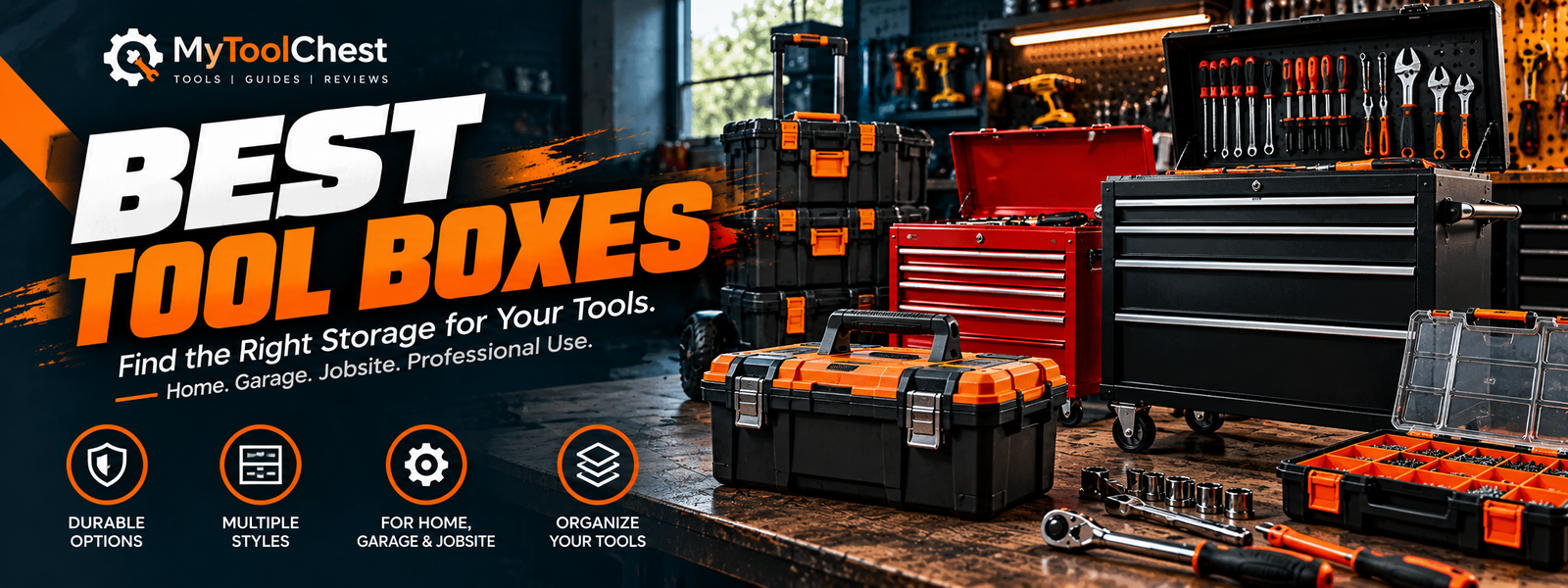
Best Tool Boxes: Find the Right Storage for Your Tools
The best tool box is the one that matches how you actually work — how many tools you own, where you store them, and whether you carry them between jobs. A home garage, a truck bed, and a jobsite trailer each put different demands on storage.
This guide walks through the main tool box types, what to compare before buying, and how to narrow a short list. It complements our broader Tool Boxes hub.
Quick Picks by Category
These categories cover the most common ways readers shop for tool storage. Product details are added after verification — placeholders below are clearly labeled.
[Product Name — Verify]
Best for: General home & garage use
Key features: [Verify before publication]
- Pros: [Verify]
- Cons: [Verify]
[Product Name — Verify]
Best for: Carrying between jobs
Key features: [Verify before publication]
- Pros: [Verify]
- Cons: [Verify]
[Product Name — Verify]
Best for: Garage workshops
Key features: [Verify before publication]
- Pros: [Verify]
- Cons: [Verify]
[Product Name — Verify]
Best for: Rough use
Key features: [Verify before publication]
- Pros: [Verify]
- Cons: [Verify]
[Product Name — Verify]
Best for: Organized storage
Key features: [Verify before publication]
- Pros: [Verify]
- Cons: [Verify]
[Product Name — Verify]
Best for: Light use
Key features: [Verify before publication]
- Pros: [Verify]
- Cons: [Verify]
Compare Tool Box Types at a Glance
A general framework. Fill in verified product details once research is complete.
| Tool Box | Best For | Type | Material | Capacity | Portability | Price Range |
|---|---|---|---|---|---|---|
| [Product — verify] | Home garage | Drawer chest | Steel | [Verify] | Stationary | [Verify] |
| [Product — verify] | Carrying between jobs | Portable box | Plastic or metal | [Verify] | High | [Verify] |
| [Product — verify] | Jobsite use | Rolling chest | Steel | [Verify] | Wheeled | [Verify] |
| [Product — verify] | Rough environments | Metal box | Steel or aluminum | [Verify] | Varies | [Verify] |
| [Product — verify] | Small tools | Organizer box | Plastic | [Verify] | High | [Verify] |
Types of Tool Boxes
Each type is built for a different setting. Understanding the trade-offs helps you decide what to prioritize.
Portable Tool Boxes
Home repairs, vehicle kits, quick jobs
Light, easy to carry, simple to store. Limited capacity for large tools. Best for homeowners and renters.
Portable guideMetal Tool Boxes
Rough environments, long-term storage
Rigid and impact-resistant, but heavier. Finish quality affects rust resistance. Suits trade users.
Metal guidePlastic Tool Boxes
Light-duty home and vehicle storage
Light, rust-free, often cheaper. Less rigid than steel and can crack under heavy loads.
Tool Boxes with Drawers
Garage and shop storage
Organized layouts and quick access. Usually stationary and requires floor or bench space.
Drawer guideRolling Tool Boxes
Jobsites, shops, heavy loads
Wheels reduce lifting strain, but add bulk. Wheel and handle build matter most.
Rolling guideStackable / Modular
Growing collections, flexible layouts
Expandable and reconfigurable. Usually brand-specific, so compatibility matters.
Compact Vehicle Boxes
Truck beds, SUVs, roadside kits
Sized to fit vehicle storage. Limited capacity and less secure than a shop chest.
How to Choose the Best Tool Box
These factors tend to decide the choice before you reach the price tag.
Intended Use & Location
A box in a garage can prioritize capacity; a travelling box needs portability. Decide where it lives first.
Dimensions & Capacity
Measure your longest and bulkiest tools, then compare against interior dimensions, not external size.
Material & Durability
Plastic is lighter and rust-resistant; steel is rigid and tough but heavier. Check latches and hinges.
Weight & Portability
A box that feels fine empty can be hard to carry loaded. Consider stairs, trucks, and shelf heights.
Drawer Layout
Shallow drawers suit small tools; deeper ones hold power tools. Check slide quality and closure.
Locking & Security
A lock deters casual theft but is not a guarantee. Consider the whole storage environment.
Weather & Corrosion
Humid garages and salt air affect finishes. Match material to where the box will actually live.
Modular Compatibility
If you plan to expand, check whether the box works with a stackable system you may already own.
Budget & Long-Term Value
The cheapest box can cost more if latches fail. Consider warranty and whether it can grow with you.
Need a narrower angle? Our mechanic tool box guide and organizer guide cover more specific setups.
Recommendations by Use Case
The right storage changes with the user and the setting. These notes describe direction, not specific picks.
DIY Homeowners
A portable box or compact drawer unit covers basic repairs. Prioritize a layout that keeps everyday items reachable.
Auto Enthusiasts & Mechanics
Drawer-based chests favor sockets and wrenches sorted by size. See our mechanic guide.
Professional Tradespeople
Rolling or modular storage handles daily transport. Wheel and handle build matter more than capacity.
Jobsite Use
Weather resistance, durable latches, and locking options matter more than finish. A rolling chest plus a portable box is common.
Small Tools & Accessories
Organizer trays keep bits and fasteners sorted. See our organizer guide.
Garage & Workshop
A stationary chest works as a home base. Pair with a portable box for jobs away. See our tool chest guide.
Common Buying Mistakes
- Buying a box that is too small. Collections grow. If your current tools already fill the box, you will be shopping again soon.
- Choosing on appearance alone. Latches, hinges, and handles decide how a box holds up. Weak hardware fails early.
- Ignoring loaded weight. A box that feels fine empty can be hard to carry full. Consider stairs, trucks, and shelf heights.
- Overlooking compartment organization. A large open box becomes a pile. Dividers and trays often matter as much as size.
- Ignoring your tools’ dimensions. Check interior measurements against your longest and bulkiest tools before buying.
- Paying for features you do not need. Locking, wheels, and modular compatibility add cost. Only pay for what your setup uses.
- Forgetting where the box will live. Humid garages and salt air affect material choices more than most shoppers expect.
Related Tool Box Buying Guides
Each guide goes deeper on one storage type. Pick the one closest to your setup.
Tool Boxes Hub
The main hub for tool box types, storage, and buying guides.
Open the hubBest Tool Chests
Drawer-based chests for garage and workshop home bases.
Compare chestsBest Portable Tool Boxes
Carry-ready options for home repairs and jobs away from the bench.
See optionsBest Rolling Tool Boxes
Wheeled storage for heavier loads and frequent transport.
See optionsTool Boxes with Drawers
Sorted, easy-access layouts for growing tool collections.
Explore designsTool Box Organizers
Trays, inserts, and bins for tidying a box you already own.
Find organizersBest Metal Tool Boxes
Steel and aluminum options for rough environments.
Compare metalTool Boxes for Mechanics
Storage built around automotive tools and shop work.
Mechanic picksFrequently Asked Questions
What should I look for when buying a tool box?
Start with where the box will live and how many tools it holds. Then check interior dimensions, material, latch and hinge quality, drawer layout if applicable, and locking if security matters. Match the box to your tasks rather than to a headline size.
Is a metal tool box better than a plastic one?
Not always. Metal offers more rigidity and impact resistance, while plastic is usually lighter and does not rust. The better choice depends on weight tolerance, environment, and how rough your use is. See our metal tool box guide.
What size tool box do I need?
Lay out the tools you want to store and measure the longest and bulkiest ones. Add space for future purchases. Compare those numbers with each product’s interior dimensions rather than the overall outside size.
Are rolling tool boxes worth it?
They help if you regularly move heavy loads over longer distances, such as across a shop floor or jobsite. If you mostly carry a few tools short distances, a standard portable box may be enough. See our rolling guide.
What is the difference between a tool box and a tool chest?
A tool box is usually a single-compartment or tray-style container that opens from the top. A tool chest generally has multiple drawers and is designed to stay in one place. Some products blur the line, so check the product description.
How should I organize a tool box?
Sort tools by task, keep the most-used items reachable, and use trays or dividers for small hardware. A tool box organizer is often cheaper than replacing the entire box.
What is the best tool box for a home garage?
For most home garages, a drawer-based chest or a rolling chest with locking drawers works well as a home base, paired with a smaller portable box. See our tool chest guide.
How can I protect tools from rust and moisture?
Store tools in a dry location when possible, wipe them down after use, and choose a box with a finish that resists corrosion if your environment is humid or near salt air. Moisture-absorbing packs can help in enclosed boxes.
Product Data Verification
This guide currently uses placeholders for product names, specifications, and retailer links.
Before Publishing
- Replace every [Verify before publication] field with confirmed product details.
- Confirm each product still exists and matches its category.
- Verify retailer links resolve and point to the correct listing.
- Confirm specifications match the manufacturer’s current published data.
- Do not publish prices, ratings, or test results that have not been verified.
Choose a Tool Box That Works for You
The right box matches where you work, what you store, and how often you move it. Use the categories above to narrow your short list, then check the related guides for the storage type that fits your setup.