Best Rolling Tool Boxes with Drawers
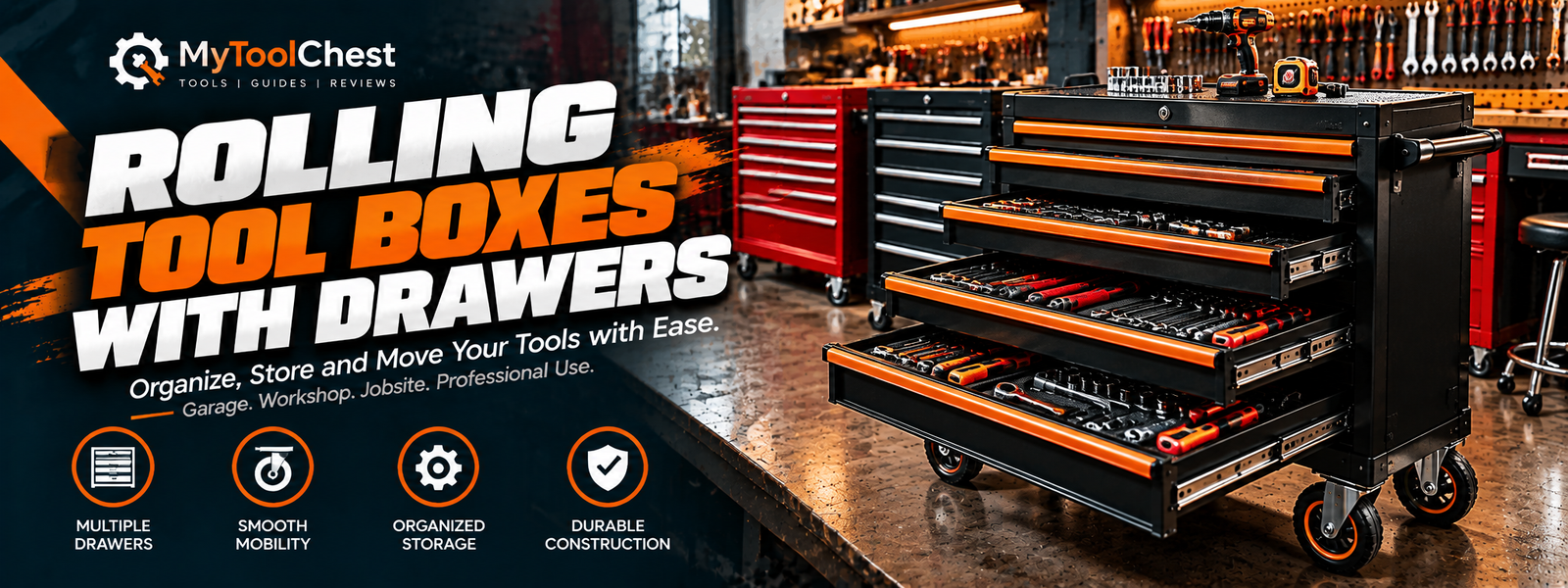
A rolling tool box with drawers combines two things at once: the organization of a drawer cabinet and the mobility of a wheeled base. That pairing keeps tools sorted and reachable while letting you move the entire setup around a garage or workshop without unloading it first.
This guide covers the main types of drawer-based rolling storage, what to compare before buying, and how to organize drawers so the layout stays useful over time.
Quick Picks by Category
These editorial categories cover the most common ways readers shop for drawer-based rolling storage. Product details are added after verification.
[Product Name — Verify]
Best for: General workshop use
Key specs: [Drawer count, dimensions, casters — verify]
- Pros: [Verify]
- Cons: [Verify]
[Product Name — Verify]
Best for: Light-duty home use
Key specs: [Drawer count, dimensions, casters — verify]
- Pros: [Verify]
- Cons: [Verify]
[Product Name — Verify]
Best for: Automotive bays
Key specs: [Drawer layout, dimensions, casters — verify]
- Pros: [Verify]
- Cons: [Verify]
[Product Name — Verify]
Best for: Heavy loads
Key specs: [Load rating, casters, dimensions — verify]
- Pros: [Verify]
- Cons: [Verify]
[Product Name — Verify]
Best for: Small spaces
Key specs: [Dimensions, drawer count, casters — verify]
- Pros: [Verify]
- Cons: [Verify]
[Product Name — Verify]
Best for: High-volume storage
Key specs: [Dimensions, drawer count, capacity — verify]
- Pros: [Verify]
- Cons: [Verify]
Compare Rolling Drawer Cabinets at a Glance
A general framework. Fill in verified product details once research is complete.
| Product | Best For | Drawer Count | Dimensions | Mobility Features | Storage Capacity | Price Range |
|---|---|---|---|---|---|---|
| [Product — verify] | General workshop | [Verify] | [Verify] | [Casters & handle — verify] | [Verify] | [Verify] |
| [Product — verify] | Light-duty home use | [Verify] | [Verify] | [Verify] | [Verify] | [Verify] |
| [Product — verify] | Automotive bays | [Verify] | [Verify] | [Verify] | [Verify] | [Verify] |
| [Product — verify] | Heavy loads | [Verify] | [Verify] | [Verify] | [Verify] | [Verify] |
| [Product — verify] | High-volume storage | [Verify] | [Verify] | [Verify] | [Verify] | [Verify] |
Types of Rolling Tool Boxes with Drawers
Drawer-based rolling storage differs mainly in size, drawer layout, and wheel design. Understanding the trade-offs helps you decide what to prioritize.
Compact Rolling Cabinets
Small garages and apartments
Small footprint with a handful of drawers. Easy to roll between work areas without taking up much floor space. Best for smaller collections.
Multi-Drawer Workshop Cabinets
Sorted, tool-by-type storage
Many shallow drawers keep tools visible and separated. Best when you need to reach a specific tool quickly. Common in professional shops.
Heavy-Duty Rolling Chests
Daily industrial use
Reinforced frames and larger casters for heavy loads. Built for workshops where the chest moves often and needs to stay stable.
Mechanic Tool Cabinets
Bays and repair shops
Shallow drawers for sockets and wrenches, plus a work surface on top. Designed for vehicle-adjacent work and quick access.
Modular Rolling Systems
Growing collections
Stackable chests and cabinets that move as one unit. Usually brand-specific, so compatibility matters when you plan to expand.
Large Garage Cabinets
Home workshop anchor storage
Bigger frames with deep drawers for power tools plus shallow drawers for small items. Needs floor space and clearance to roll.
How to Choose the Best Option
Drawer layout and load ratings decide most choices. These factors help you compare options on equal footing.
Drawer Count, Depth & Layout
Shallow drawers suit small tools; deep drawers hold power tools. Match layout to your collection rather than to a headline count.
Dimensions & Workshop Space
Measure the spot where the cabinet will sit, plus clearance to roll it out. A cabinet that does not fit stays unused.
Capacity & Load Limits
Check both drawer load ratings and total cabinet capacity. Caster ratings often set the real limit for a loaded cabinet.
Material & Finish
Steel gauge and finish affect long-term wear. Check welds, hinges, and drawer fronts for rigidity.
Slides & Opening Mechanism
Ball-bearing slides open smoothly under load. Check how far drawers extend and whether they lock closed when moved.
Wheel Size & Stability
Larger casters roll over uneven floors more easily. A wide wheelbase helps stability when drawers are extended.
Locking & Security
Confirm the locking system covers all drawers, not just the top. Drawer locks deter casual access in shared shops.
Accessories & Liners
Drawer liners, dividers, and trays keep tools from shifting. Check whether the cabinet works with organizers you already own.
Maintenance
Slides, casters, and locks benefit from occasional cleaning and light lubrication. Powder-coat finishes resist scratches better than paint.
Budget & Long-Term Value
The cheapest cabinet can cost more if slides fail. Consider warranty and whether the layout can grow with your tools.
Before purchasing, verify both drawer load limits and total cabinet capacity in the manufacturer’s published data. Do not assume capacity from the cabinet size alone.
Recommendations by Use Case
The right drawer cabinet changes with the user and the setting. These notes describe direction, not specific picks.
Home Garage
Focus on space efficiency and everyday tool access. A mid-size rolling cabinet with a mix of shallow and deep drawers covers most home collections.
Automotive Mechanics
Drawer layout, tool access, and mobility matter most. Shallow drawers for sockets and wrenches plus a top work surface suit vehicle-adjacent work. See our mechanic guide.
Professional Workshops
Durability, load capacity, and daily use matter more than finish. Heavy-duty slides and larger casters pay off over the long run.
DIY Enthusiasts
A compact rolling cabinet handles most DIY collections. Focus on practical storage, ease of movement, and budget over maximum capacity.
Small Workspaces
Compact dimensions and maneuverability matter more than drawer count. A narrow cabinet with a well-planned layout often works better than a wide one that cannot roll out of its corner.
How to Organize Drawers Effectively
A good layout keeps tools reachable and prevents the cabinet from becoming a pile. These habits tend to hold up over time.
Group by Task or Category
Sort tools by what they do, not just by size. Keeping sockets together, wrenches together, and drivers together makes the layout faster to learn.
Put Frequently Used Tools Up Top
Keep everyday tools in the top drawers where you reach them most. Reserve lower and deeper drawers for specialty or less-frequent items.
Use Liners & Dividers
Drawer liners stop tools from sliding. Dividers keep small items like bits and fasteners from mixing into a single pile.
Keep Heavy Tools Low
Heavy items belong in lower drawers. That keeps the center of gravity down and helps the cabinet stay stable when upper drawers are open.
Avoid Overloading Drawers
Excess weight strains slides and can damage drawers over time. Check the load rating and distribute tools evenly across the drawer.
Leave Clearance to Open
Leave space in front of the cabinet so drawers can open fully. A drawer that hits a wall or bench cannot be used properly.
Common Buying Mistakes
- Choosing a cabinet that does not fit the workspace. Measure the footprint plus clearance to open drawers and roll the cabinet out. If it does not fit, it will not get used.
- Ignoring drawer depth and usable dimensions. A shallow drawer cannot hold a power tool, and a deep drawer wastes space on small items. Match drawer depths to your tools.
- Overlooking drawer and total load limits. Slides and casters have published load ratings. Loading past them can damage the cabinet or shorten its life.
- Choosing wheels unsuitable for the floor. Small hard casters struggle on rough concrete. Match wheel size and material to the floor the cabinet travels on.
- Ignoring stability when drawers are extended. A top-heavy cabinet can tip when a loaded drawer is fully open. Look for a wide wheelbase and drawer locks that release one drawer at a time.
- Buying more storage than necessary. An oversized cabinet takes floor space you may need for other work. Match capacity to your actual collection.
- Overlooking locking and organization accessories. Drawer locks and liners cost little but change how the cabinet works day to day. Check whether they are included or sold separately.
Related Buying Guides
Each guide goes deeper on one storage type. Pick the one closest to your setup.
Best Tool Boxes
The main buying guide covering portable, metal, drawer, and rolling boxes.
Read the guideBest Tool Chests
Drawer-based chests and rolling cabinets for workshop use.
Compare chestsBest Portable Tool Boxes
Carry-ready storage for jobs away from the bench.
See portable optionsBest Rolling Tool Boxes
Wheeled storage for heavy loads and frequent transport.
See rolling optionsTool Boxes for Mechanics
Storage built around automotive tools and shop work.
Mechanic picksTool Box Organizers
Trays, inserts, and bins for tidying drawers and boxes.
Find organizersTool Boxes Hub
The main hub for tool storage types, guides, and comparisons.
Open the hubFrequently Asked Questions
What is the best rolling tool box with drawers?
There is no single best box for everyone. The right one depends on your tool collection, the floor surface, and how much space you have. Compare drawer layout, load ratings, wheel size, and construction rather than relying on marketing claims.
How many drawers should a rolling tool box have?
There is no fixed number. A larger collection usually benefits from more shallow drawers, while a smaller collection can work with fewer, deeper drawers. Match the layout to your tools rather than to the headline drawer count.
Are rolling tool boxes with drawers good for mechanics?
They often are. Shallow drawers keep sockets and wrenches sorted, a top work surface suits vehicle-adjacent tasks, and wheels let you move the chest to the work. Look for ball-bearing slides, drawer locks, and casters rated for the loaded weight.
What should I check before buying a rolling tool cabinet?
Check drawer count and depth, total dimensions and available space, per-drawer and total load ratings, wheel size and material, locking coverage, and whether the drawers lock closed when moved. Confirm all of these against the manufacturer’s published data.
How important are drawer load limits?
They are important. Loading a drawer past its rating can strain slides, warp the drawer, or damage the cabinet frame. Check both the per-drawer load limit and the total cabinet capacity before loading it fully.
Are larger rolling tool cabinets always better?
No. A larger cabinet offers more storage but takes more floor space and can be harder to maneuver. In small workshops, a compact cabinet with a well-planned drawer layout often works better than a large one that cannot roll freely.
How should I organize a tool cabinet?
Group tools by task or category, keep frequently used items in the top drawers, and use liners and dividers to stop tools from shifting. Keep heavy tools in lower drawers, avoid overloading any single drawer, and leave clearance to open drawers fully. A tool box organizer can help with small items.
What is the difference between a rolling tool box and a tool chest?
The terms overlap in the market. A rolling tool box is usually smaller and often single-compartment, while a rolling tool chest is a larger cabinet with multiple drawers. Product names vary between brands, so compare actual dimensions and layout instead of the label. See our tool chests guide.
Product Data Verification
This guide currently uses placeholders for product names, specifications, and retailer links.
Before Publishing
- Replace every [Verify before publication] field with confirmed product details.
- Confirm each product still exists and matches its category.
- Verify retailer links resolve and point to the correct listing.
- Confirm specifications match the manufacturer’s current published data.
- Do not publish prices, ratings, or test results that have not been verified.
Give Every Tool a Place
A rolling drawer cabinet earns its place when the layout keeps tools reachable, the casters move smoothly over your floor, and the cabinet fits the space you have. Match the drawer depths to your tools, verify load ratings, and organize drawers by task. Then use the related guides below to compare specific storage types.
Best Rolling Tool Boxes Guide Best Tool Chests Guide Tool Boxes Hub