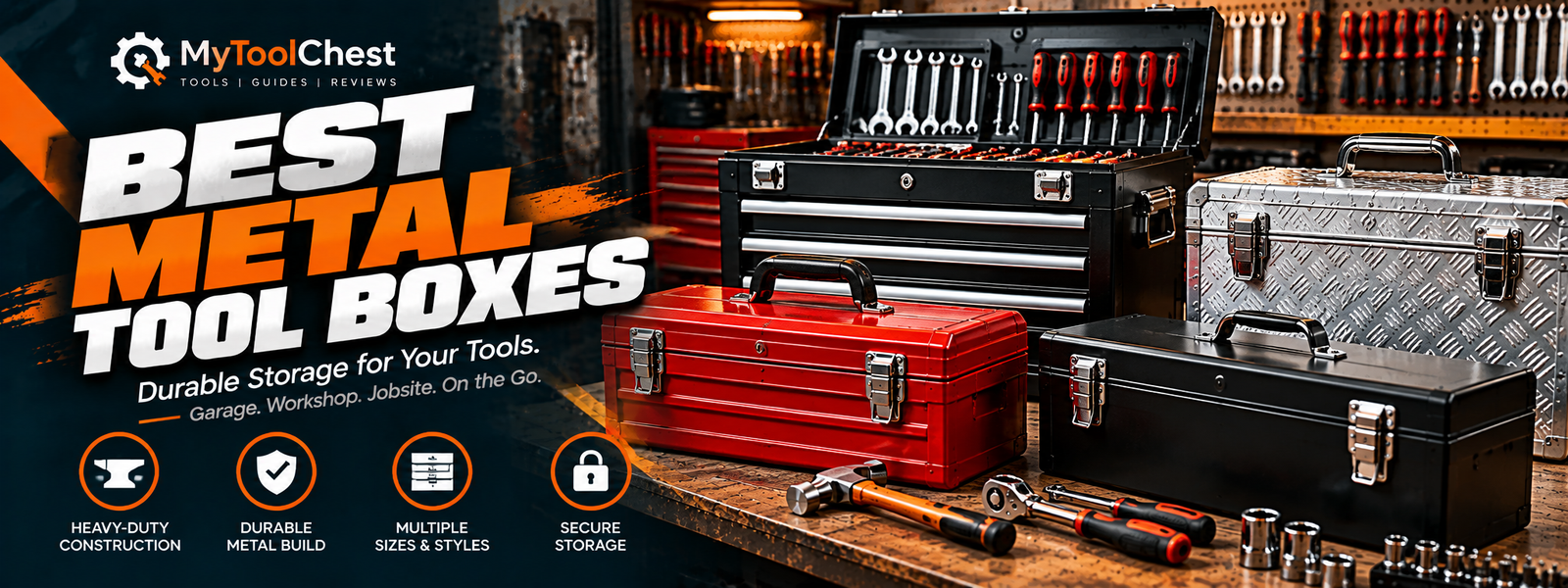
Best Metal Tool Boxes: Strong Steel Storage That Lasts
The best metal tool boxes are the ones that survive years of hard use — dropped, dragged, loaded with heavy tools and left in a damp garage — and still open smoothly and lock securely. Steel and aluminium boxes protect your tools far better than plastic, and they look the part in a workshop too. This guide explains steel versus aluminium, gauges, rust protection, locks, sizes and drawer layouts, so you can choose a metal tool box that fits your tools and your work.
What Makes a Metal Tool Box Different?
A metal tool box is built from folded and welded sheet metal, usually steel or aluminium, with a rigid frame that keeps its shape under load. Unlike a plastic box, it will not crack in cold weather, warp in heat or flex when you carry a full load of spanners. The lid and drawers run on metal slides or hinges, so they stay aligned and close properly even when the box is heavy. For a broader overview of storage, see our tool boxes hub.
Metal boxes also protect against theft and damage. A steel chest with a proper lock is much harder to break into than a plastic case, and the box itself shields tools from knocks, dust and moisture. That is why mechanics, engineers and tradespeople have relied on metal tool storage for decades — and why a good metal box is often the last one you will need to buy.
Steel vs Aluminium Tool Boxes
Steel is the workhorse. It is heavier and stronger than aluminium, it resists dents and it holds up to the weight of a full set of sockets and wrenches without sagging. Most professional tool chests and workshop cabinets are steel, because strength and durability matter more than weight in a fixed workshop. Steel is also cheaper per kilogram, so you get more box for your money.
Aluminium is the lightweight option. It weighs roughly a third of steel, so it is easier to carry, and it never rusts. That makes aluminium a good choice for a portable tool box you carry to a job, or a box that lives in the back of a van. The trade-off is that aluminium dents more easily and costs more for the same size. If the box stays in one place, choose steel; if you carry it every day, aluminium is worth the premium.
Steel Gauges Explained
Steel thickness is measured in gauge — and the lower the number, the thicker the steel. Most metal tool boxes use 16 to 20 gauge steel. A 16-gauge box (about 1.5 mm) is heavy-duty: it resists dents, supports heavy drawers and lasts for decades. An 18-gauge box (about 1.2 mm) is the sweet spot for most home workshops — strong enough for daily use without being excessively heavy. A 20-gauge box (about 0.9 mm) is lighter and cheaper, but it dents more easily and can flex under a heavy load.
Check the gauge of the drawer slides as well as the body. Ball-bearing drawer slides carry more weight and open smoothly even when a drawer is full of sockets, while friction slides can stick and wear out. For a heavy tool box with drawers, look for slides rated to at least 20 kg per drawer.
Rust and Corrosion Protection
Steel rusts if its coating fails, so the finish matters as much as the gauge. Powder coating is the best common finish: a tough, baked-on layer that resists chips, scratches and moisture. Look for a box with a smooth, even powder coat and no bare metal showing at the edges, corners or inside the drawers. A cheaper painted finish can chip and let rust start underneath.
Aluminium does not rust, but it can corrode in salty or damp conditions. A clear coat or anodised finish protects it. Wherever you keep a metal box, wipe it down after use, keep it off a damp concrete floor (a wooden pallet or rubber mat helps), and touch up any chips in the coating promptly. A little care keeps a metal box rust-free for years.
Locks, Latches and Hinges
A tool box is only as secure as its lock. A keyed cylinder lock with a steel hasp is the minimum for a box that holds valuable tools. Better boxes add a tubular or disc-detainer lock, which is harder to pick, and a locking bar that secures every drawer at once. If you store the box in a shared workshop or a vehicle, a proper lock is essential, not optional.
Check the latches and hinges too. Draw latches should close firmly and stay shut when the box is carried. A continuous (piano) hinge along the lid is stronger than two small butt hinges and will not sag over time. Gas struts that hold the lid open are a useful touch on a large chest — they stop the lid slamming shut on your fingers while you work.
Sizes and Drawer Layouts
Metal tool boxes come in three broad sizes. A portable hand-carry box (around 400–500 mm wide) holds a basic socket set and a few hand tools and is easy to carry to a job. A mid-size chest or cabinet (600–900 mm wide) with several drawers suits a home workshop and holds a full tool box for mechanics range. A large roller cabinet (1,000 mm or wider) with many drawers is a professional workshop fixture.
For drawer layouts, shallow drawers suit sockets, spanners and small tools; deep drawers suit power tools, large wrenches and bulky items. A mix of depths is more useful than many identical drawers. Add tool box organizers — foam inserts, socket rails and dividers — to keep drawers tidy and to spot a missing tool at a glance. If you need to move the box around the workshop, consider rolling tool boxes with castors and a locking brake.
Who Are Metal Tool Boxes For?
Home mechanics: a mid-size steel chest with drawers is the best single purchase — it holds a growing tool collection, keeps it organised and protects it. Start with a chest you can add to, rather than a small box you will outgrow.
Professional mechanics and tradespeople: a heavy-gauge steel roller cabinet with ball-bearing drawers and a strong lock is the standard. It takes daily abuse, holds a full professional set and secures expensive tools overnight.
Mobile workers and van users: an aluminium box is easier to lift in and out of a vehicle, and it will not rust in a damp van. Choose one with a secure latch and a comfortable handle, and bolt it down if it lives in the vehicle permanently.
DIY and occasional users: a smaller steel hand-carry box is enough for household repairs and occasional car maintenance, and it costs far less than a full cabinet while still protecting your tools properly.
Common Mistakes to Avoid
- Buying on size alone. A huge, thin-gauge box is worse than a smaller, thick-gauge one. Check the gauge and the drawer slide rating before you check the dimensions.
- Ignoring the lock. A cheap latch is easy to force. If your tools are worth protecting, the lock is worth paying for.
- Overloading the drawers. Exceeding a drawer slide rating bends the slides and makes the drawer stick. Spread heavy tools across drawers and keep the heaviest items low.
- Forgetting rust protection. A bare steel box in a damp garage will rust. Choose a powder-coated box and keep it off the floor.
- Choosing a box you cannot move. A full steel chest is very heavy. If you need to move it, make sure it has castors — or choose aluminium.
Frequently Asked Questions
Are metal tool boxes better than plastic?
Yes, for durability and security. Metal is stronger, lasts longer, protects tools better and is harder to break into. Plastic is lighter and cheaper, but it cracks and flexes under a heavy load.
What gauge steel is best for a tool box?
For most workshops, 18 gauge is a good balance of strength and weight. For heavy professional use, 16 gauge is better. Avoid boxes thinner than 20 gauge if you will load them heavily.
Do aluminium tool boxes rust?
No — aluminium does not rust. It can corrode in salty conditions, but a coated or anodised finish prevents that. It is the best choice for a box that lives in a van or outdoors.
How do I stop my metal tool box rusting?
Keep it dry and off a damp floor, touch up chips in the coating, and wipe it down after use. A silica gel pack or a light oil wipe inside the drawers helps in a humid workshop.
For related guides, see our best tool chests, best tool boxes with drawers, best tool boxes for mechanics and the tool boxes hub.